UK garage emerged from South London and East London pirate radio stations in the mid-1990s and reshaped British club culture within a decade. What started as a localised offshoot of New York house and New Jersey garage became the blueprint for grime, dubstep, bassline, and every bass-heavy UK genre that followed. This guide covers the full arc — origins, key figures, club nights, the split into subgenres, and why the sound still matters in 2026.
Where UK Garage Actually Came From
Most genre timelines trace UK garage back to one specific moment: the Twice as Nice parties at Colosseum in Vauxhall, mid-1990s. But the roots go deeper.
The genre inherited its foundation from:
- US garage house — particularly the output of labels like Strictly Rhythm and Nu Groove
- UK hardcore (1991–1993), which already had a distinctly British relationship with speed and bass
- Jungle and drum and bass, which normalised chopped breakbeats and MC culture on pirate radio
- Speed garage (1996–1997), a transitional period where house records were pitch-shifted up, bass lines were exaggerated, and a distinctly British swagger entered the production
Speed garage acts like Dreem Teem, EZ, and Norris "Da Boss" Windross began charting. Records like Todd Edwards' cuts — imported and re-edged for UK tastes — became anthems at nights like Pure Silk and Desert Storm.
The Classic Era: 1998 to 2001
By 1998, what people now call 2-step garage had crystallised into its own sound. The drum pattern was the defining marker: a syncopated kick-snare pattern that avoided the straight four-on-the-floor pulse of house. It felt skippy, nervous, and urban.
Key production signatures of the era:
| Element | Classic UK Garage Treatment |
|---|---|
| Drum pattern | 2-step syncopation, off-beat snares |
| Bass | Deep, sub-heavy, often reese-influenced |
| Vocals | R&B-style, often pitched and chopped |
| BPM | 130–136 |
| Atmosphere | Late-night, aspirational, dressed-up |
The labels that defined this window were small, independent, and operating out of South London and East London:
- Locked On Records — home to MJ Cole, one of the most technically precise producers of the scene
- Oxide Recordings
- Gassed Up
- Relentless Records — more commercial, handled crossover acts
Artful Dodger and Craig David's "Re-Rewind" reached number two in the UK charts in January 2000 without mainstream radio support at first. That chart position confirmed what pirate stations like Rinse FM, Deja Vu, and Don FM already knew: the scene had national reach.
The MCs and the Shift Toward Grime
Live MCs had been part of UK club culture since the warehouse rave era. In garage, they began pulling focus. By 2001 and 2002, the MC sets at nights like Sidewinder and Helter Skelter were as essential as the DJ sets.
The vocal style shifted. Where early garage MCs often complemented the music with hype and hooks, a younger generation started spitting harder, faster, and over slower tempos. The energy changed from aspirational R&B to something more confrontational and street-specific.
This is the documented fault line between UK garage and grime:
- UK garage: 130+ BPM, sung vocals prominent, polished production, dressed-up crowd
- Proto-grime (2001–2003): 140 BPM locked in, MCs dominant, rougher beats, darker atmospheres
Wiley, Dizzee Rascal, Skepta, and Lethal Bizzle did not emerge from nowhere. They emerged from garage nights and pirate sets, then pushed the tempo down and the aggression up. The east London MC collective Roll Deep formed directly out of this transition period.
Key Artists Who Defined the Sound
Rather than listing every name from the era, these are the figures whose work most clearly shaped what UK garage became:
MJ Cole — Produced "Sincere" (1998), a record that still sounds architecturally precise. His studio work for Oxide and Neutrino, Beverley Knight, and others demonstrated that garage could operate at the level of major-label R&B without losing its identity.
Artful Dodger — Mark Hill and Matt Rowe turned the 2-step format into a vehicle for genuine pop songwriting. Their work with Craig David, Melanie Blatt, and Romina Johnson sits at the commercial peak of the genre.
So Solid Crew — 21 members, a collective model more like a crew than a band, and "21 Seconds" at number one in 2001. They also brought genuine tension with mainstream media, which amplified their profile in the way only controversy can.
Oxide and Neutrino — "Bound 4 Da Reload (Casualty)" charted at number one in 2000, four minutes of garage and jungle spliced with a TV theme. It shouldn't have worked. It did.
DJ EZ — The technical benchmark for garage DJs. His sets at Twice as Nice and his Knowledge magazine mixes remain reference points for mixing skill.
Todd Edwards — Technically an American producer, but his vocal-splice technique was so central to the 2-step sound that he belongs in any serious account of the genre. Daft Punk credited him publicly. The garage scene adopted him as its own.
The Club Nights and Pirate Radio Infrastructure
UK garage did not build itself through mainstream media. It built itself through:
Pirate radio stations — Operating primarily from tower blocks in South and East London:
- Rinse FM (went legal in 2010, still broadcasting)
- Deja Vu FM
- Don FM
- Heat FM
- Freeze FM
Sets were recorded on cassette, copied, sold at record fairs and market stalls. This distribution network created a physical archive of the scene's development.
Club nights — The venues were rarely glamorous. The cultural weight came from the crowds and the sound systems:
| Night | Venue | Significance |
|---|---|---|
| Twice as Nice | Colosseum, Vauxhall | Originated the core scene |
| Sidewinder | Various | Major touring night, multi-city |
| Pure Silk | SE London venues | Early speed garage focus |
| Eskimo Dance | Stratford Rex | Transition point into grime |
Sidewinder events were filmed and released on VHS and DVD. Those recordings are now historical documents of what the music looked and sounded like in the room.
The Photography and Visual Culture of the Scene
The visual identity of UK garage was specific: designer labels, tailored clothing, a dressed-up aesthetic that separated the scene from jungle's more casual dress codes. This was aspirational culture, not post-industrial grimness.
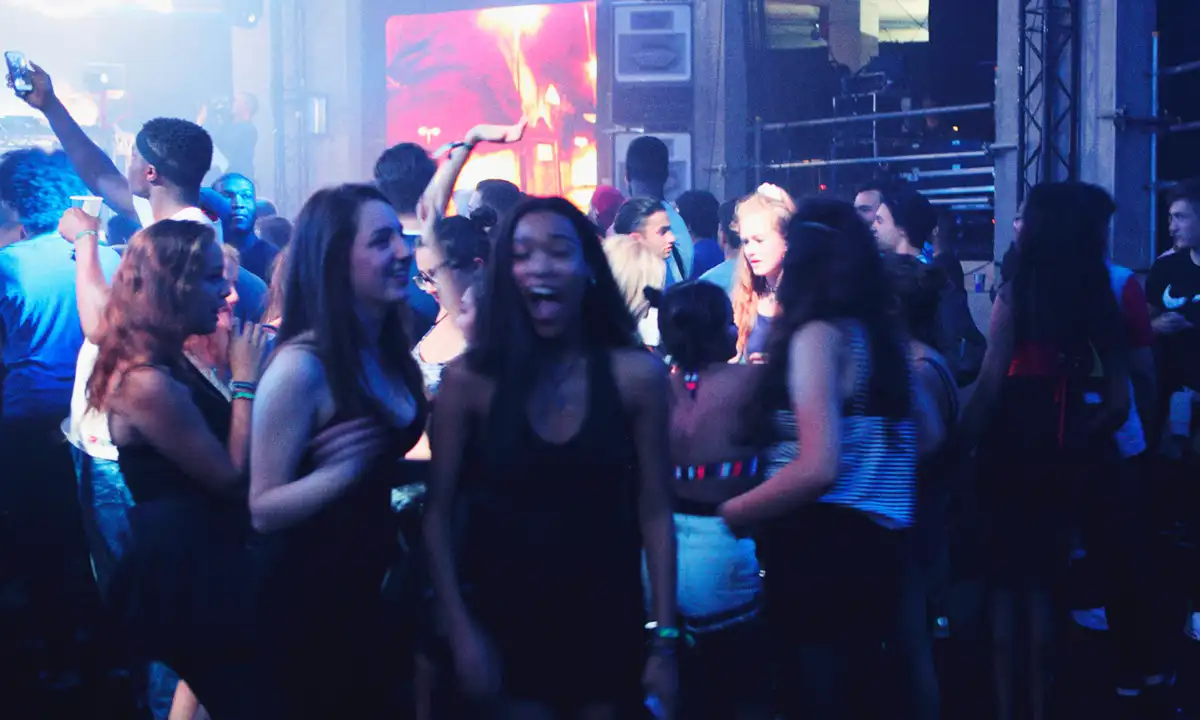
Club photographers working in this period captured something that formal music journalism largely missed. Images from nights like Twice as Nice document the fashion, the crowd demographics, the physical spaces. South London venues in the late 1990s looked nothing like the mainstream perception of British nightlife at the time.
This photographic record matters because:
- Most UK garage content was not documented by major music press until after the scene had peaked
- The BBC and mainstream radio were largely hostile to pirate-adjacent music until commercial crossover acts made it unavoidable
- Visual archives from independent photographers and videographers are now the primary source material for documentaries and retrospectives
Why UK Garage Still Matters in 2026
The lineage is direct and documented:
- UK garage produced grime (2003 onward) — Dizzee Rascal, Wiley, Skepta
- Grime producers influenced dubstep — Benga, Skream, Digital Mystikz worked in overlapping spaces
- Bassline (Yorkshire variant, 2005–2010) took the 4x4 bass patterns and ran them through Northern crowds
- UK funky (2008–2012) brought the syncopated rhythms back with West African influences
- Afroswing (2016–present) — J Hus, Kojo Funds — carries the melodic garage DNA forward
In 2026, production software has made it easy to recreate the 2-step sound precisely. A new generation of producers on platforms like YouTube and SoundCloud is working explicitly in the classic UK garage format, sometimes in collaboration with original-era figures.
The re-release market is active. Locked On, Relentless, and independent labels have put original catalogue onto streaming platforms with liner notes and archival photography. Demand from listeners under 25 who did not experience the original scene has been commercially significant enough to change label priorities.