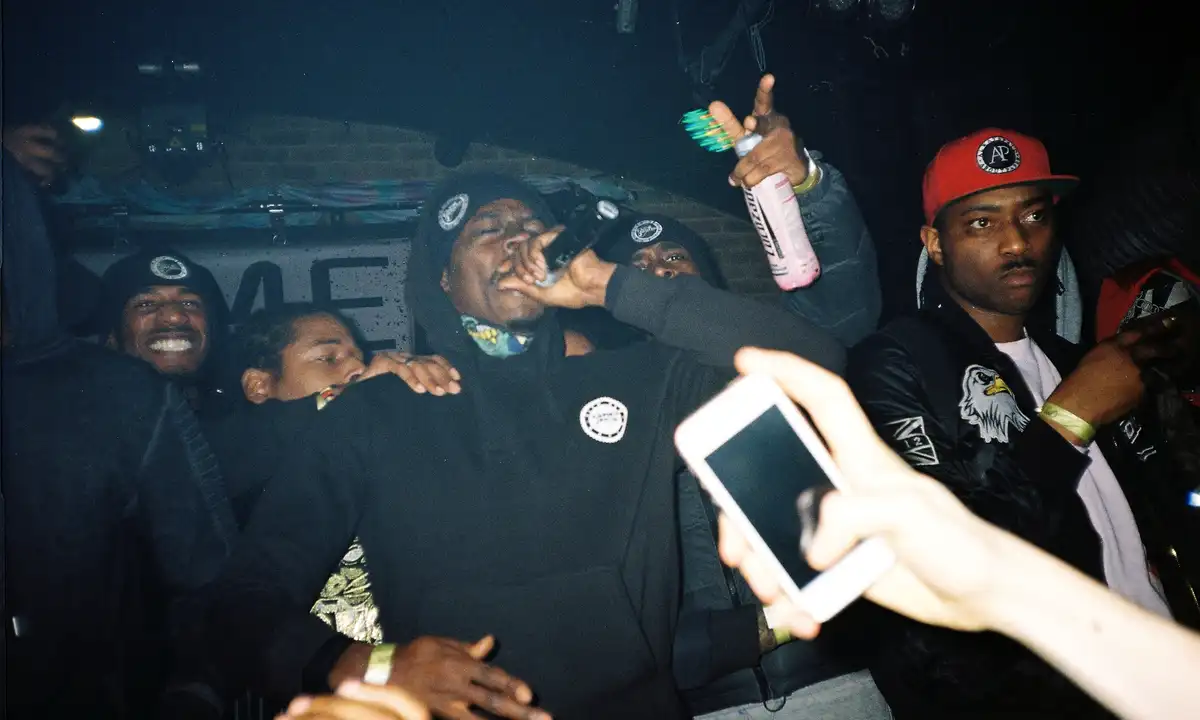
London's club scene did not just host music — it produced it. Grime and UK garage were not born in studios. They were built in dark rooms with bad sound systems, on pirate radio frequencies, in ends where nobody from a major label was watching. The nightlife was the infrastructure.
What Made London's Club Scene Different
Most cities have nightlife. London had a petri dish.
The combination of a fractured geography — dozens of distinct neighbourhoods with distinct sounds — and a near-total absence of mainstream industry interest in the late 1990s and early 2000s meant that scenes developed in isolation, under pressure, and with real stakes. You were not performing for an A&R. You were performing for your ends.
Key conditions that made London different:
- Pirate radio stations (Rinse FM, Deja Vu, Heat FM) broadcast new music before any club would book it
- Promoters worked without licensing budgets, running nights in venues that bent rules
- MC culture meant live performance was inseparable from the recorded track
- Postcodes defined sound — East London, South London, and West London each developed distinct flavours
UK Garage: The Bridge Between Rave and Grime
Before grime existed, UK garage was the dominant underground sound. Its London peak ran roughly from 1997 to 2003.
Nights like Twice as Nice at Browns and Club UK in Wandsworth were the venues where the music breathed. The crowds dressed up. There was a formality to garage culture that later grime deliberately dismantled.
| Era | Sound | Typical Venue Type | Dress Code | Crowd Age Range |
|---|---|---|---|---|
| Late 1990s | UK garage, 2-step | Licensed nightclubs, West End | Smart casual to formal | 18–28 |
| Early 2000s | Transition to grime | Smaller venues, East London | Casual, sportswear | 16–25 |
| Mid 2000s | Grime peak | Raves, pirate events, youth clubs | No code | 14–24 |
| 2010s–2020s | Post-grime, crossover | Mainstream festivals, arenas | Mixed | 18–35 |
Garage's club culture had money moving through it — door fees, bar revenue, promoter cuts. When grime emerged from its edges, it rejected that economy almost entirely. The early grime rave was not a ticketed event with a guest list. It was a flyer on a phone screen and a location texted at 10pm.
Venues That Actually Mattered
There is a tendency to mythologise London nightlife through a handful of famous clubs. The reality is messier. The venues that shaped grime and garage were frequently not purpose-built clubs at all.
Plastic People, Curtain Road, Shoreditch — Closed in 2015 after 21 years. Capacity around 200. Notoriously uncompromising on sound quality and bookings. Became a reference point for what a small room could do if the music came first.
Fabric, Farringdon — Larger, more commercial, but consistently significant for the moments when UK sounds crossed into international recognition. Fabric Live nights brought grime production into a venue with actual budgets.
Area, Southwark — A warehouse venue that hosted pivotal garage nights before the scene fractured. The size and industrial layout matched the rawness of the sound.
Eskimo Dance events — Not tied to a single venue. These grime raves, associated with Riko Dan and others, moved between spaces and became a reference point for how grime existed live before it had mainstream festival slots.
Rhythm Division record shop, Bow Road — Not a club at all, but functioned as a scene hub. Artists like Dizzee Rascal were connected through spaces like this. Record shops were social infrastructure.
Club Photography and the Visual Archive
The photography that came out of London's nightlife scenes in this period is historically significant and undervalued. Photographers working at grime and garage events in the early 2000s were documenting something that had no mainstream media presence.
What made this photography distinct:
- Shot mostly on film or early digital, often in near-total darkness
- Subjects were not posing for press — they were in their environment
- The images captured scenes before they were recognised as scenes
- Many photographs remain in private archives or were posted to defunct forums
The challenge now is archival. Photographs from Twice as Nice, from pirate radio station visits, from early Eskimo Dance nights — these exist in fragments. Some have been preserved by individual photographers. Many have not.
A photo of Wiley in a club in 2002 is a primary historical document. It should be treated like one.
Pirate Radio as the Other Half of Nightlife
You cannot talk about London's nightlife and leave out the transmission towers.
Pirate radio and club culture were not separate systems. They were the same system running on two tracks. The MC who clashed on Deja Vu FM on a Tuesday was headlining a rave on Saturday. The set that got taped and circulated was a recording of a live event or a radio session that functioned like one.
Key pirate stations in the grime and garage ecosystem:
| Station | Area | Active Period | Associated Acts |
|---|---|---|---|
| Rinse FM | East London | 1994–present (licensed 2010) | Wiley, Dizzee Rascal, Skepta |
| Deja Vu FM | East London | Late 1990s–mid 2000s | Multiple early grime MCs |
| Heat FM | South London | Early 2000s | South London garage and grime |
| Raw Mission | Various | Early 2000s | MC Shystie, others |
Rinse FM is the example that shows how a pirate station becomes legitimate without losing identity. Going legal in 2010 did not erase what it had been. That history is part of why it still matters.
How Grime Changed the Relationship Between Live Performance and Nightlife
Grime inverted the normal relationship between recorded music and live performance.
In most genres, you make an album, then you tour. In early grime, you performed constantly — radio, raves, clashes — and the recorded material was almost secondary. A dubplate was something you played out, not something you released.
This created a live culture that was extreme in its intensity. MC clashes were not entertainment in a detached sense. They were competitive events with real consequences for reputation. Losing a clash in front of your ends in 2003 was not a minor setback.
The result was a generation of performers who could hold a crowd in a small, hostile room with no production and no script. That skill did not disappear when grime went mainstream — it is why artists like Skepta, Stormzy, and Dave translated to arena stages without losing credibility.
What London's Night-Time Economy Numbers Say
By 2024, London's night-time economy was estimated to generate over 26 billion pounds annually, employing around 1.6 million people. The Night Czar role, created in 2016 under Sadiq Khan, was specifically designed to protect and develop this sector.
But the underground scenes that built the culture largely exist outside those statistics. The illegal rave, the unlicensed venue, the pirate station — these were not captured in formal economic data while they were happening. Their cultural output, however, is now being formally recognised through archival projects, academic research, and museum acquisitions.
The V&A's grime-related acquisitions and the work of organisations like the Black Cultural Archives represent a belated but growing acknowledgment that this was not just music — it was urban cultural history.
The Current Scene: What Survived and What Didn't
London nightlife has changed structurally. Rising property values closed venues throughout the 2010s. Fabric's temporary closure in 2016 (following pressure from Islington council after two drug-related deaths) became a flashpoint for debates about whether London's institutions could survive regulatory pressure. It reopened the same year after a significant public campaign.
What has changed since 2016:
- Agent of Change principle adopted into planning law in 2019, requiring new developments near existing venues to soundproof against them rather than vice versa
- Several key East London venues lost to redevelopment (Plastic People, Passing Clouds)
- New venues have opened but without the same deep community roots
- The function of nightlife as scene-builder has partially migrated online — but not entirely
Live events remain irreplaceable for certain things. A DJ set streamed online does not do what a room at capacity does. The energy exchange is different. London's current generation of producers and MCs still come up through live culture, even if the specific venues and nights are different.