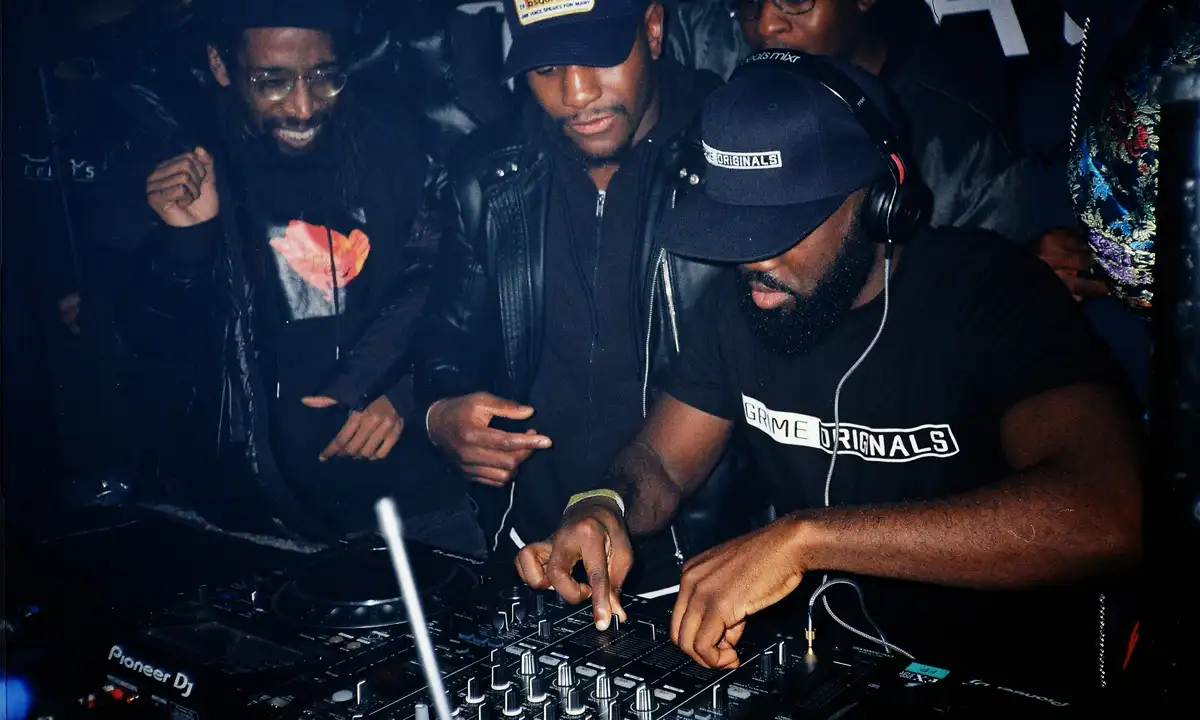
Grime did not emerge from a record label strategy or a PR campaign. It came out of council estates in East London, pirate radio stations broadcasting on illegal frequencies, and a generation of teenagers who had no budget but had plenty to say. Understanding grime history means understanding a specific time, a specific place, and a specific set of frustrations that produced one of the most original sounds the UK has ever made.
The Roots: UK Garage Was the Launchpad
Grime did not appear from nowhere. Its direct ancestor is UK garage, which dominated London's club scene from roughly 1996 to 2002. UK garage was built on syncopated rhythms, chopped vocal samples and a polished sound designed for nights out. Labels like So Solid Crew and artists such as Craig David brought it to mainstream radio.
But garage had a problem: it was expensive to perform and increasingly associated with violence at certain venues. Promoters started refusing to book garage nights. Younger MCs, many of them teenagers from Bow, Hackney, Lewisham and Deptford, were effectively locked out of the scene.
Key differences between UK garage and what became grime:
| Feature | UK Garage | Early Grime |
|---|---|---|
| Tempo | 130 BPM | 140 BPM |
| Mood | Upbeat, romantic | Aggressive, confrontational |
| Production tools | Professional studios | Cheap software, bedroom PCs |
| Distribution | Club nights, major labels | Pirate radio, mixtapes, CD-Rs |
| Lyrical focus | Girls, dancing, lifestyle | Postcode identity, conflict, ambition |
That 10 BPM shift was not a small thing. It fundamentally changed what you could do vocally and emotionally over a beat.
2001 to 2003: The Defining Window
Most historians of the genre point to a narrow window between 2001 and 2003 as the moment grime became its own thing. Several things converged at once.
Wiley, already active in garage, started making what he called "eski beats" — productions built around ice-cold, almost alien synth stabs. Tracks like Eskimo and Igloo circulated on pirate stations and gave the emerging scene its first sonic identity. Nobody in mainstream music sounded remotely like this.
Pirate radio was the infrastructure. Stations like Rinse FM, Deja Vu FM and Freeze FM gave MCs two to three hour slots where they could clash, freestyle and build audiences without commercial gatekeepers. The format was brutal and competitive. You either held the microphone or you didn't.
Roll Deep, the crew Wiley founded, became the first major collective. Members included a very young Dizzee Rascal, Flow Dan, Scratchy and others. The crew format was central to early grime — it was about postcode loyalty, shared identity and mutual development.
Dizzee Rascal and Boy in da Corner (2003)
If there is a single moment when the outside world was forced to take grime seriously, it is the release of Boy in da Corner in July 2003. Dizzee Rascal was 18 years old. The album documented life on the Crossways Estate in Bow, East London, with a directness that made most British music of the time sound pampered by comparison.
The album won the Mercury Prize in 2003, beating Radiohead and Coldplay. For many critics, this was incomprehensible. For grime, it was proof that the music carried genuine artistic weight, not just novelty value.
Key tracks that defined the early sound:
- I Luv U — first commercial single, built on a sparse, clattering beat
- Fix Up, Look Sharp — used a Billy Squier sample, crossed over to mainstream radio
- Sittin Here — showed the introspective, anxious side that separated Dizzee from pure battle rappers
- Jezebel — dense, paranoid, completely uncommercial and one of the best tracks he ever recorded
The Skepta and BBK Era: 2005 to 2014
After the initial wave, grime had a complicated middle decade. Major labels signed several artists and tried to soften the sound for radio. It rarely worked. The underground continued developing through clashes, pirate shows and video platforms.
Boy Better Know (BBK), founded by Skepta, JME, Shorty and others, became the most important crew of the second generation. Where Roll Deep had been primarily about music, BBK operated more like an independent label with a strong merchandise and identity component. JME was particularly focused on business infrastructure.
Two things kept grime alive between roughly 2006 and 2012 when mainstream interest had faded:
1. Clashes and Confrontations: The MC clash format, inherited from Jamaican sound system culture, stayed central. Events like Lord of the Mics gave MCs a platform and created genuine drama that fans followed obsessively.
2. Grime Forums and Early YouTube: Sites like Grime Forum and later SBTV (founded by Jamal Edwards in 2006) provided distribution outside radio. Edwards in particular was responsible for bringing a new generation of both artists and viewers to the genre.
The 2015 Revival and Mainstream Crossover
By 2014, grime had been written off by parts of the music press as a historical curiosity. What happened next was one of the more dramatic reversals in recent UK music history.
Skepta's return to a rawer sound with tracks like That's Not Me (2014) and then Shutdown (2015) reconnected the music with its original energy. The production was minimal, the delivery was direct, and it resonated internationally in a way earlier crossover attempts had not.
Several converging factors drove the 2015-2016 revival:
- Drake publicly affiliated himself with grime, wearing Skepta's merch and appearing at UK shows
- Konnichiwa (2016) won the Mercury Prize, echoing the Dizzee moment thirteen years earlier
- Stormzy's Man's Not Hot went viral in late 2017, reaching parts of the audience that had never engaged with grime
- Grime artists were invited to headline and appear at festivals from which they had historically been excluded, including Glastonbury
This was not grime becoming pop. The core sound stayed confrontational. What changed was the cultural infrastructure's willingness to accommodate it.
Key Figures in Grime History
Understanding the genre requires knowing who built it. This is not a comprehensive list, but these artists are central to any serious account:
| Artist | Role | Landmark moment |
|---|---|---|
| Wiley | Founding architect | Eski beat series, 2001-2003 |
| Dizzee Rascal | First mainstream breakthrough | Mercury Prize, 2003 |
| Kano | Consistent lyrical standard-bearer | Home Sweet Home album, 2005 |
| Skepta | Second-generation revival | Konnichiwa Mercury Prize, 2016 |
| JME | Independent infrastructure model | BBK label structure |
| Stormzy | Crossover and cultural visibility | Glastonbury headline, 2019 |
| Ghetts | Pure MC craft, longevity | Conflict of Interest, 2021 |
| D Double E | Iconic voice, influencing a generation | Active since 2001 |
Ghetts deserves particular mention here. While artists like Stormzy and Dizzee became household names, Ghetts spent twenty years building a reputation purely on lyrical ability, becoming the MC's MC and releasing Conflict of Interest to some of the strongest reviews the genre has received.
Grime and Photography: The Visual Archive
Grime's history is not only sonic. The culture produced a distinctive visual identity documented by photographers working in clubs, on estates and at pirate radio studios before any of this was considered commercially valuable.
Photographers like Tim Benson, David Titlow and others created archives that now function as primary historical documents. These images — poorly lit, technically imperfect, energetically alive — captured something that press shots and label photography would have sanitised out of existence.
The relationship between grime and photography matters because it reflects the DIY infrastructure of the whole movement. Nobody was commissioning shoots. People were turning up with cameras and documenting what they saw. That impulse — to capture the scene from inside it — is part of what makes grime's visual culture distinct from manufactured pop.
What Grime Influenced Outside the UK
The influence of grime on global rap and pop music is substantial and frequently underacknowledged.
- US drill music adopted the dark, minimal production aesthetic that grime had developed. Artists like Chief Keef have cited awareness of UK sounds.
- Afrobeats' UK crossover was partly enabled by the infrastructure grime built for Black British music to reach mainstream venues and radio.
- French rap, particularly the more aggressive styles associated with artists in the banlieues of Paris, shares structural similarities — both emerged from immigrant community frustration with similar societal pressures.
- Pop production across Europe absorbed the 140 BPM tempo structure and sparse, synth-heavy production that grime pioneered.