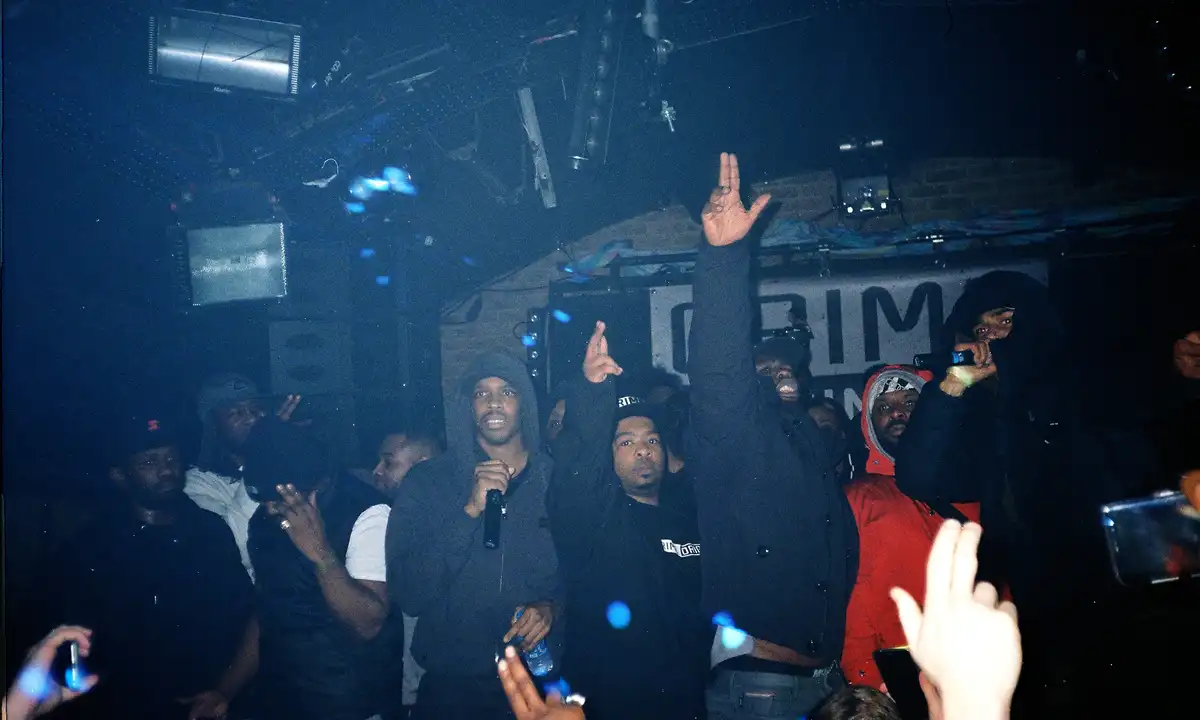
Got a story tip, a hard drive full of forgotten rave photos, or a grime MC profile that deserves a proper write-up? This page explains exactly how to reach us and what to include so your message gets a real response.
Who We Are and Why It Matters
Wot Do You Call It documents UK grime, UK garage, and London club culture — not as a commercial media outlet chasing monthly uniques, but as an archive that treats the music and the photography with the same seriousness the scene always deserved. The name comes from Todd Edwards' 2002 question about what to call the sound coming out of pirate radio stations and council estate block parties. That question is still being answered, and we're still here to record the answers.
What You Can Contact Us About
Not every enquiry fits the same box. Below is a breakdown of what we handle and how to frame your message.
| Enquiry Type | What to Include | Expected Response Time |
|---|---|---|
| Photo archive submission | Photographer name, dates, venues, file format and rough quantity | 5–10 working days |
| Editorial pitch (article, profile, documentary) | 150-word outline, your previous work, subject availability | 7 working days |
| Image licensing (commercial or editorial) | Publication name, usage context, print run or digital reach | 3–5 working days |
| Press and PR | Artist name, release date, relevance to grime/garage/club scene | 5 working days |
| General / corrections | As much context as possible | 5 working days |
Photo Archive Submissions
This is where we want to hear from you most. London club photography from the late 1990s through the mid-2010s is disappearing — hard drives fail, landlords clear flats, collections end up in skips. If you shot raves, pirate radio station sessions, MC freestyles, car park sets, or anything related to the grime and garage circuit, we want to know about it.
What makes a submission viable:
- Images tied to a specific venue, event, or artist — unnamed crowd shots with no context are harder to archive usefully
- Approximate dates matter more than exact ones — "Sidewinder, 2001-ish" is enough to start
- RAW files are not required — quality scans of prints or standard JPEGs work fine
- You retain copyright; we discuss licensing or archival access on a case-by-case basis
Photographers who have contributed to similar archives include professionals like Rachel Barrett and amateurs who just happened to have a camera at Eskimo Dance in 2003. Both types of material have documentary value.
Editorial Pitches
We commission and publish long-form pieces, MC profiles, scene histories, and documentary-style writing. The site does not chase trending topics or anniversary content for its own sake. A pitch on Rinse FM's early days or the transition from UK garage to grime in 2001-2003 is more likely to land than a news-peg piece about a current chart position.
Strong pitch criteria:
- Primary source access — interviews with people who were actually there
- A specific argument or narrative, not a general overview
- Knowledge of the distinction between grime, UK garage, bassline, and UK drill — conflating these tells us you haven't done the reading
- Awareness of what's already been covered by GRM Daily, Mixmag, and DJ Mag, and why your angle is different
Word counts we commission: 800 words (profiles), 1,500–2,500 words (features), 3,000+ words (deep archive pieces or oral histories).
Image Licensing
Archive photographs from the UK grime and club scene have appeared in documentaries, academic publications, exhibition catalogues, and editorial features. If you need to license an image for any of these uses, contact us with the following information:
- The specific image, if you've seen it on the site, or a description of what you're looking for
- Your publication or project name
- Whether the use is editorial or commercial
- Territory and duration of use
- Print run or estimated digital reach
We work with photographers to agree fees and clearances. We do not operate a stock-library model where images are available for instant download at a flat rate.
Press and PR Submissions
We cover music rooted in UK grime, UK garage, and the broader club culture that connects those scenes to London nightlife past and present. We do not cover pop releases with a grime feature, UK drill for its own sake without historical context, or anything that sits comfortably in mainstream music journalism.
Useful context for a PR submission:
- How the artist or release connects to grime or garage lineage
- Whether there is an interview opportunity with someone who has a genuine scene history
- Exclusivity window, if relevant
Sending a generic press release addressed to "the team" with no knowledge of what we actually publish is the fastest way to get no response.
Corrections and Accuracy
Archive journalism involves dates, names, and locations that are often disputed or simply wrong in existing published sources. If you spot an error — a misattributed photo, a wrong year on a venue, an MC credited under the wrong name — tell us. Include your source or your firsthand knowledge, and we will investigate and correct.
Corrections are taken seriously here because the archive function of this site matters more than defending past editorial decisions.
Common Questions Before You Write In
Do you accept unsolicited freelance articles?
Yes, but read the editorial pitch section above before sending anything. Completed articles sent without a prior conversation are unlikely to run. A 150-word pitch is always the right starting point.
Can I use photographs from the site for my own project?
Not without licensing clearance. The photographs on this site are not public domain, and many are still under active copyright held by the original photographer. Contact us with details of your project and we will connect you with the rights holder.
Do you cover events outside London?
The archive focus is London, but UK grime did not exist only in London. Scenes in Birmingham, Manchester, and Bristol produced their own photographers, MCs, and club nights. Material from outside London is welcome as long as it connects clearly to the broader UK grime and garage story.
I have VHS or MiniDV footage from raves in the early 2000s. Is that relevant?
Extremely relevant. Video footage from that period is rarer than photography and often more contextually rich. DV footage from pirate radio broadcasts, live sets, or backstage moments at events like Eskimo Dance, Sidewinder, or Déjà Vu FM nights is exactly the kind of material that gets lost. Contact us with a rough description of what you have — dates, format, quantity — and we will figure out the best way to proceed.
What We Are Not
To avoid wasting your time or ours:
- We are not a PR agency or a music marketing service
- We do not sell advertising space through this contact page
- We do not pass reader data to third parties
- We do not commission content designed to promote a brand or product under editorial cover
- We are not a streaming platform and do not host full tracks or mixes for public access
A Note on Response Times
The site operates with a small core team. Response times listed in the table above are realistic targets, not guarantees. If you have not heard back within two weeks, a single follow-up is reasonable. Multiple chase emails in the same week are not necessary and do not speed up the queue.
Why the Archive Matters
UK grime emerged on pirate radio frequencies — Rinse FM, Deja Vu FM, Freeze 92.7 — between roughly 2001 and 2004, carrying forward a lineage from UK garage that had itself evolved out of speed garage, 2-step, and jungle. The photographers who covered that period worked without commission, without budgets, and without any certainty that what they were documenting would eventually be considered one of the most significant musical movements Britain produced in the 21st century.
By 2026, the major label canonisation of grime is two decades old, documentaries have been made, books have been written, and retrospectives fill festival programmes. But the granular material — the photographs from basement club nights, the recordings from block parties, the memories of how sounds actually moved from Bow to Brixton — still requires active effort to preserve and contextualise. That is what this archive is for, and that is why the contact page matters more here than on most music sites.
If you were there, worked adjacent to the scene, or have material that belongs in a serious record of what happened, this is where to start the conversation.